Automated connections & data intake
Design or integrate REST APIs and webhooks with authentication, validation and versioning.
System & data integration / ASHA TECH
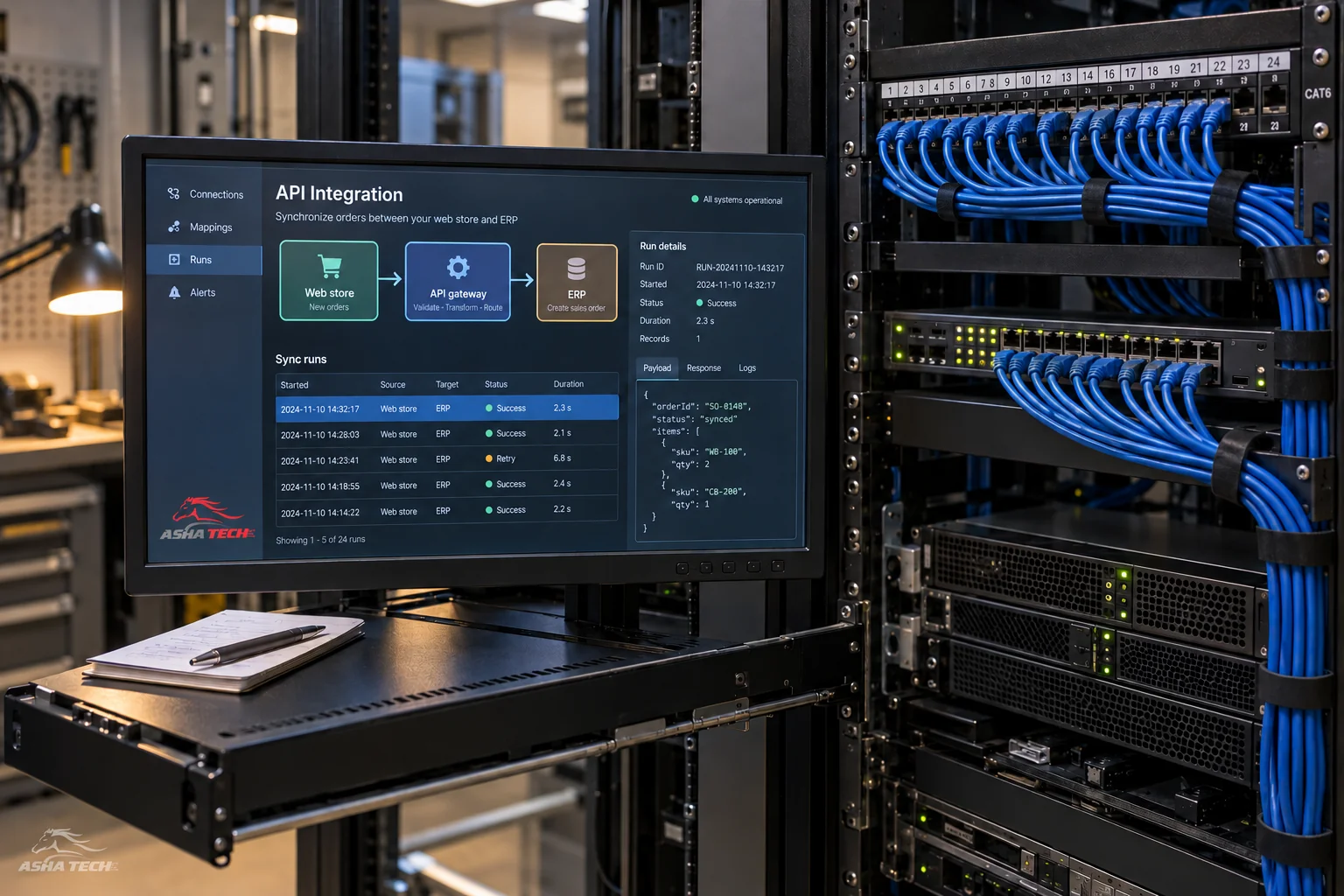
Send web orders to the warehouse, sales to accounting, or existing data to an app. We assess and build integrations with visibility into successful and failed transfers.
What does this system help with?
Transfer products, orders and documents between systems, with clear ownership of each data set and agreement on when it is sent.
Beyond successful delivery, teams need to see pending and failed items, prevent duplicates and have tools to investigate and continue work.
Design or integrate REST APIs and webhooks with authentication, validation and versioning.
Connect sales, purchasing, stock, payments and reference data with clear data ownership.
Connect orders, products, prices, delivery status, marketplaces and carriers.
Receive payment status, verify signatures, prevent duplicates and design reconciliation.
Support CSV, Excel, SFTP and database connections with controlled access and data checks.
Track successful, failed, pending and mismatched items, with safe retry tools.
See how it works
New interface concepts to discuss the direction
Open the demonstration to explore the details
Usage example
Each step passes on the information that matters
so the next person knows what to do.
Define which system owns products and transactions.
Transform formats, check duplicates and send to the destination.
See completed items, pending work and issues to fix.
Illustrative approach. Details and integrations are assessed against your actual systems and processes.
How we work with you
Design with the people who will use the system, from the first conversation through to launch readiness.
Review today's processes, problems and desired outcomes.
Try the screens and user journey before agreeing on details.
Deliver in stages, gather feedback and test together.
Check data, train users and agree on post-delivery support.
Before we talk
Possibly through files, databases or other automation. Permission is required, along with a review of stability, security and source-system change risks.
Define business or idempotency keys, statuses and checks for previous results before creating a new record, based on both systems' rules.
Use queues, retry policies, dead-letter handling or review queues according to importance. Retain payloads and responses only as data policies permit.
API documentation, a sandbox, sample data, authentication details, rate limits, contacts for both systems and the business events to connect.
Start with your idea
Have an idea or a task a system could help with? Tell our team—no technical vocabulary needed.